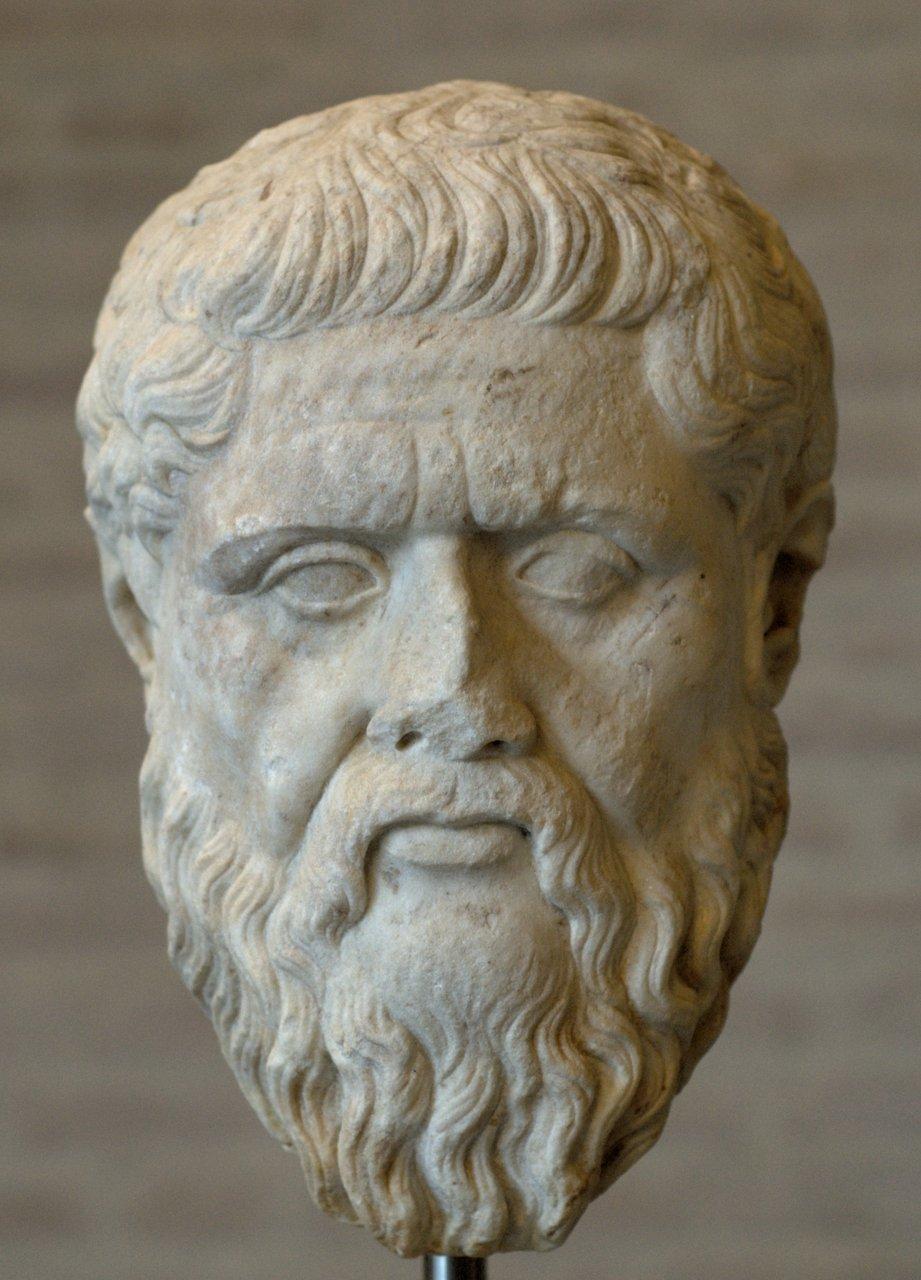
Plato
Philosopher, founder of the Academy · c. 428–c. 348 BCE
Classical Athens
Create a free account to talk with Plato. It takes a minute and costs nothing.
About this Mind
Plato was born in Athens around 428 BCE into a wealthy family that traced itself to Solon; his mother's cousin Critias and her brother Charmides were among the Thirty who seized power in 404 BCE. As a young man he followed Socrates, was in court at his trial in 399 BCE and offered to stand surety for a fine, and turned away from Athenian politics after the execution. At about forty he went to Italy and Sicily, met the Pythagorean Archytas and the young Dion of Syracuse, and on his return founded a school in the grove of the Academy, outside the walls of Athens, where mathematicians and philosophers, among them Aristotle, worked for years. He wrote dialogues rather than treatises: Socrates leads most of them, and through him Plato set out the Forms, the immortality and parts of the soul, the cave and the sun, rulers who are philosophers, love that rises from bodies to beauty itself, and the making of the world. He returned twice to Syracuse, in 367 and 361 BCE, to guide the young tyrant Dionysius II, and both visits ended in failure and danger; Dion, who later took the city, was murdered in 354 BCE. In his last years he was writing the Laws, a long conversation about the laws of a new city in Crete, which he left unfinished when he died in Athens in 348 or 347 BCE. His dialogues all survive and have been read ever since.
Mindprint
Every dot is one statement about Plato, placed on the topic it describes. The closer to the center, the firmer its ground.
55 statements across 12 of 12 topics. 49 documented, 5 inferred, 1 speculative.
- Documented: with a source
- Inferred: a careful reading
- Speculative: an extrapolation
- Unknown: never recorded
A picture of what was recorded, never a measure of the person.
| Topic | Documented | Inferred | Speculative | Total |
|---|---|---|---|---|
| Identity | 4 | 1 | 0 | 5 |
| Personality | 0 | 1 | 1 | 2 |
| Beliefs | 17 | 0 | 0 | 17 |
| Values | 2 | 0 | 0 | 2 |
| Communication | 4 | 0 | 0 | 4 |
| Worldview | 2 | 0 | 0 | 2 |
| Knowledge | 4 | 0 | 0 | 4 |
| Experiences | 9 | 0 | 0 | 9 |
| Relationships | 6 | 0 | 0 | 6 |
| Preferences | 0 | 1 | 0 | 1 |
| Reasoning | 1 | 1 | 0 | 2 |
| Uncertainties | 0 | 1 | 0 | 1 |
Sources (21)
This Mind is built from these documents and studies. Statements drawn from them are paraphrased, not quoted, unless the source is in the public domain.
- Socrates' defence speech to the jury (English translation)
- Phaedo, Socrates' last conversation on the soul (English translation)
- Timaeus, an account of the making of the world (English translation)
- Laws (Greek text)
- Republic, a dialogue on justice and the best city (English translation)
- Republic (Greek text)
- Laws, a conversation on the laws of a new city (English translation)
- Socrates' defence speech to the jury (Greek text)
- Meno, a dialogue on whether virtue can be taught (English translation)
- Parmenides, a dialogue on the Forms and the One (English translation)
- Plato, Stanford Encyclopedia of Philosophy
- Plato (Wikipedia)
- Symposium, speeches in praise of love at Agathon's dinner (English translation)
- Phaedrus, a dialogue on love, the soul and writing (English translation)
- Theaetetus, a dialogue on knowledge (English translation)
- Theaetetus (Greek text)
- Letters (Greek text)
- On his life, his journeys to Sicily, his will and his pupils (English translation)
- Platonic Academy (Wikipedia)
- Plato (Wikiquote)
- Letters, to Dion's associates and friends, to Dionysius and others (English translation)