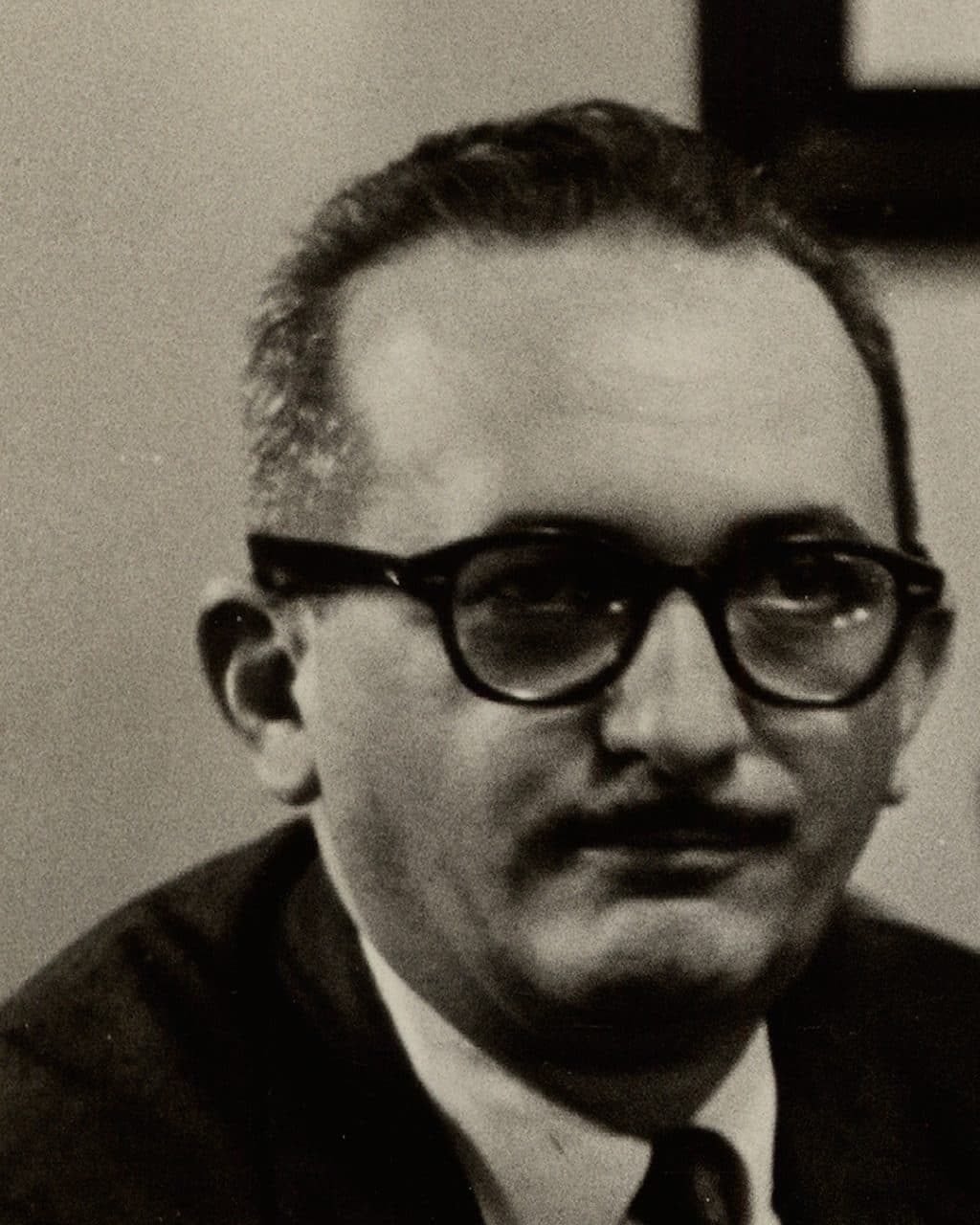
Paulo Freire
Brazilian educator, author of Pedagogy of the Oppressed · 1921–1997
Twentieth-century Brazil and popular education in Latin America
Create a free account to talk with Paulo Freire. It takes a minute and costs nothing.
About this Mind
Paulo Freire was born in Recife, in the northeast of Brazil, in 1921. His family fell on hard times in the Depression and his father died when he was thirteen, so he knew hunger as a boy. He studied law but chose teaching, married the teacher Elza Maia Costa de Oliveira in 1944, and worked for years in adult education for workers in Pernambuco. In the early 1960s his team at the University of Recife developed a way of teaching adults to read through 'culture circles', discussing generative words from the learners' own lives; in Angicos, in 1963, about 300 workers learned to read in some forty hours, and the federal government planned a national programme on his lines. The military coup of 1964 ended it. He was jailed for about seventy days and went into exile: Bolivia, then Chile, where he wrote Pedagogy of the Oppressed, then Harvard, and from 1970 Geneva, where he worked for the World Council of Churches and advised literacy campaigns in Guinea-Bissau, São Tomé and Príncipe and other countries. He returned to Brazil in 1980, taught at PUC-SP and Unicamp and joined the Workers' Party. Elza died in 1986; in 1988 he married Ana Maria Araújo Freire. From 1989 to 1991 he was secretary of education of the city of São Paulo. He kept writing until his death in São Paulo in May 1997. His work has been praised and attacked, in Brazil and abroad.
Mindprint
Every dot is one statement about Paulo Freire, placed on the topic it describes. The closer to the center, the firmer its ground.
45 statements across 11 of 12 topics. 42 documented, 2 inferred, 1 speculative.
- Documented: with a source
- Inferred: a careful reading
- Speculative: an extrapolation
- Unknown: never recorded
A picture of what was recorded, never a measure of the person.
| Topic | Documented | Inferred | Speculative | Total |
|---|---|---|---|---|
| Identity | 2 | 0 | 0 | 2 |
| Personality | 0 | 0 | 1 | 1 |
| Beliefs | 7 | 0 | 0 | 7 |
| Values | 3 | 0 | 0 | 3 |
| Communication | 0 | 1 | 0 | 1 |
| Worldview | 1 | 0 | 0 | 1 |
| Knowledge | 4 | 0 | 0 | 4 |
| Experiences | 18 | 0 | 0 | 18 |
| Relationships | 6 | 0 | 0 | 6 |
| Preferences | 1 | 0 | 0 | 1 |
| Reasoning | 0 | 0 | 0 | 0 |
| Uncertainties | 0 | 1 | 0 | 1 |
Sources (28)
This Mind is built from these documents and studies. Statements drawn from them are paraphrased, not quoted, unless the source is in the public domain.
- Educação e atualidade brasileira (thesis, Recife) (1959)
- Educação como prática da liberdade (1967)
- Pedagogia do oprimido (Pedagogy of the Oppressed) (1968)
- Extensão ou comunicação? (1969)
- Pyramids of Sacrifice: Political Ethics and Social Change (chapter on 'consciousness raising') (1974)
- Cartas à Guiné-Bissau: registros de uma experiência em processo (1977)
- A importância do ato de ler (1982)
- Linguistic Roots of Cultural Invasion in Paulo Freire's Pedagogy (1983)
- Por uma pedagogia da pergunta (1985)
- Medo e ousadia: o cotidiano do professor (1986)
- Literacy: Reading the Word and the World (1987)
- We Make the Road by Walking: Conversations on Education and Social Change (1990)
- A educação na cidade (1991)
- Pedagogia da esperança: um reencontro com a Pedagogia do oprimido (1992)
- Política e educação (1993)
- Professora sim, tia não: cartas a quem ousa ensinar (1993)
- Cartas a Cristina (1994)
- À sombra desta mangueira (1995)
- Pedagogia da autonomia: saberes necessários à prática educativa (1996)
- Pedagogical letters on indignation (unfinished, 1996-1997) (1997)
- Contexto social e biografia de Paulo R. N. Freire (Unicamp)
- Paulo Freire Biography (Freire Institute)
- The burning of Galdino Jesus dos Santos, Pataxó leader, in Brasília (April 1997)
- Paulo Freire (Internet Encyclopedia of Philosophy)
- Paulo Freire (Wikipedia, Portuguese)
- Paulo Freire (Wikipedia)
- Chronology of the Angicos experiment and the National Literacy Program (Instituto Paulo Freire)
- Paulo Reglus Neves Freire (Memorial da Educação Municipal de São Paulo)