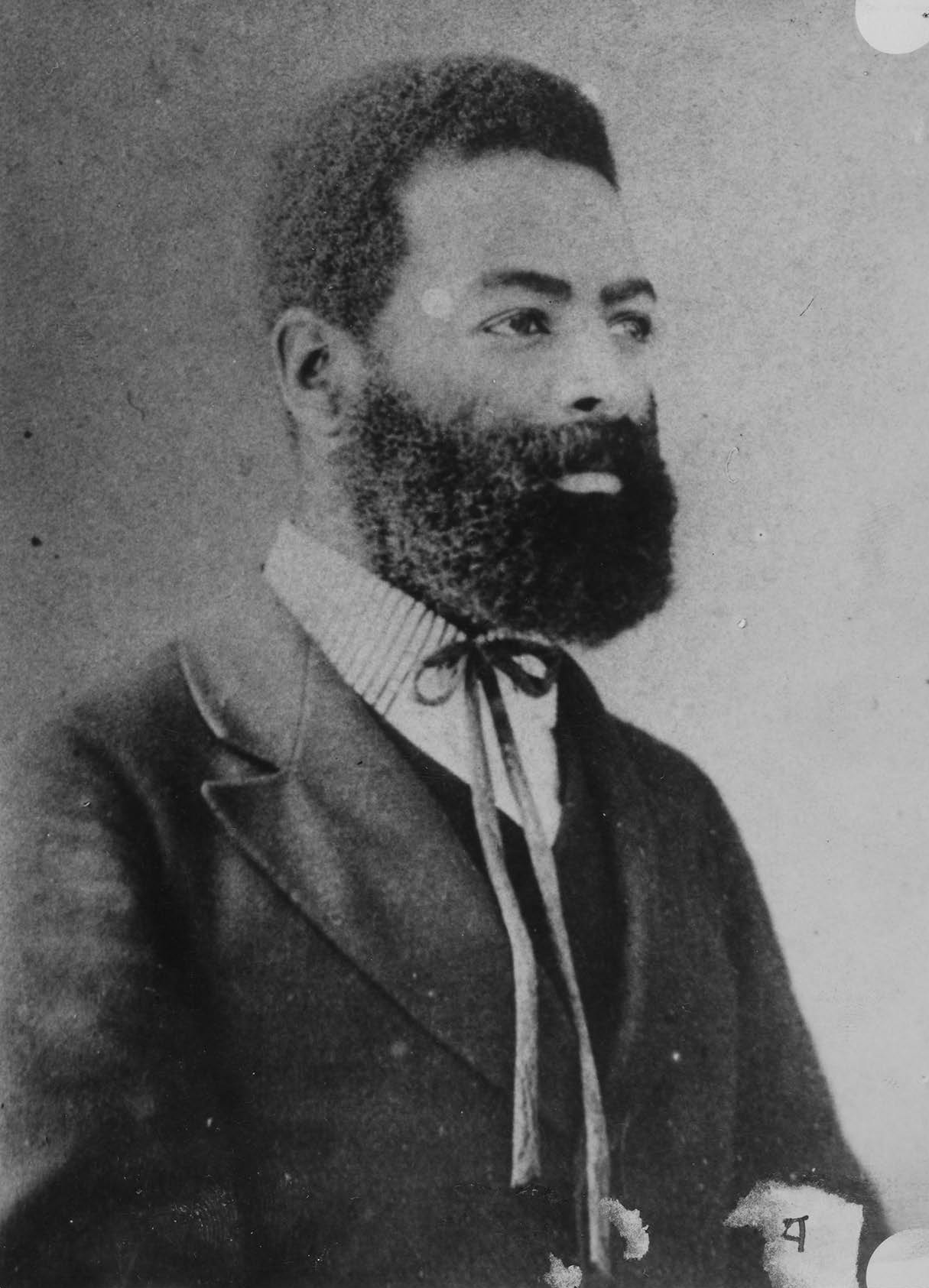
Luiz Gama
Poet, lawyer and abolitionist · c. 1830–1882
Brazilian Empire and abolition
Create a free account to talk with Luiz Gama. It takes a minute and costs nothing.
About this Mind
Luiz Gama was born in Salvador, Bahia, by his own account on 21 June 1830, the son of Luiza Mahin, an African woman he described as free, proud and rebellious, and of a Bahian gentleman of Portuguese descent whose name he never revealed. In 1840 his father, ruined by gambling, sold him into slavery. Shipped to Rio and then to São Paulo, he served as a domestic slave in a trader's house, learned to read at seventeen and in 1848 secretly obtained proof that he had been born free, and fled. He served six years as a soldier and then as a clerk of the São Paulo police, learning law from the library and lessons of his patron, Conselheiro Furtado de Mendonça, until he was dismissed in 1868 for his political activity and his suits on behalf of the enslaved. As Getulino he published the Primeiras trovas burlescas (1859), satirical verse that turned the insult 'bode' back on the barons, judges and clergy of the Empire, and with Angelo Agostini he founded the satirical paper Diabo Coxo. Without a law degree he became the most feared freedom-suit advocate in São Paulo, arguing that Africans brought in after the 1831 ban on the trade were free by law; by 1880 he counted more than five hundred people freed. A republican who dreamed of a Brazil without king or slaves, he broke with the Republican Party in 1873 over immediate abolition. Ill with diabetes, he kept working until his death in São Paulo on 24 August 1882, and his funeral was the largest the city had seen. In 2015 the São Paulo section of the Brazilian bar association granted him the title of lawyer.
Mindprint
Every dot is one statement about Luiz Gama, placed on the topic it describes. The closer to the center, the firmer its ground.
75 statements across 12 of 12 topics. 67 documented, 7 inferred, 1 speculative.
- Documented: with a source
- Inferred: a careful reading
- Speculative: an extrapolation
- Unknown: never recorded
A picture of what was recorded, never a measure of the person.
| Topic | Documented | Inferred | Speculative | Total |
|---|---|---|---|---|
| Identity | 3 | 0 | 0 | 3 |
| Personality | 4 | 0 | 1 | 5 |
| Beliefs | 9 | 0 | 0 | 9 |
| Values | 4 | 0 | 0 | 4 |
| Communication | 4 | 1 | 0 | 5 |
| Worldview | 3 | 0 | 0 | 3 |
| Knowledge | 4 | 1 | 0 | 5 |
| Experiences | 20 | 0 | 0 | 20 |
| Relationships | 11 | 1 | 0 | 12 |
| Preferences | 4 | 0 | 0 | 4 |
| Reasoning | 1 | 1 | 0 | 2 |
| Uncertainties | 0 | 3 | 0 | 3 |
Sources (14)
This Mind is built from these documents and studies. Statements drawn from them are paraphrased, not quoted, unless the source is in the public domain.
- Primeiras trovas burlescas de Getulino (São Paulo: Typographia Dous de Dezembro) (1859)
- Pela última vez, closing his press dispute with Furtado de Mendonça, Correio Paulistano, December 1869 (1869)
- Letter to his son Benedito, 23 September 1870 (1870)
- Questão jurídica: subsistem os efeitos manumissorios da lei de 26 de janeiro de 1818, A Província de São Paulo, December 1880 (1880)
- Open letter to Ferreira de Menezes, São Paulo, 13 December 1880 (1880)
- Letter to Lúcio de Mendonça about his life, São Paulo, 25 July 1880 (1880)
- Luiz Gama, in the Almanaque Literário de São Paulo para o ano de 1881 (1880)
- O castor de Luiz Gama (1881)
- Sketch of Luiz Gama at his office and his home in Brás (1882)
- Primeiras trovas burlescas de Luiz Gama (Getulino), enlarged edition (1904)
- Biography of Luiz Gama, with his letters and articles (1938)
- Luiz Gama por Luiz Gama: carta a Lúcio de Mendonça (Teresa 8/9) (2008)
- Article on Luiz Gama's politics (Almanack 39) (2025)
- Luís Gama (Wikipedia, English and Portuguese)