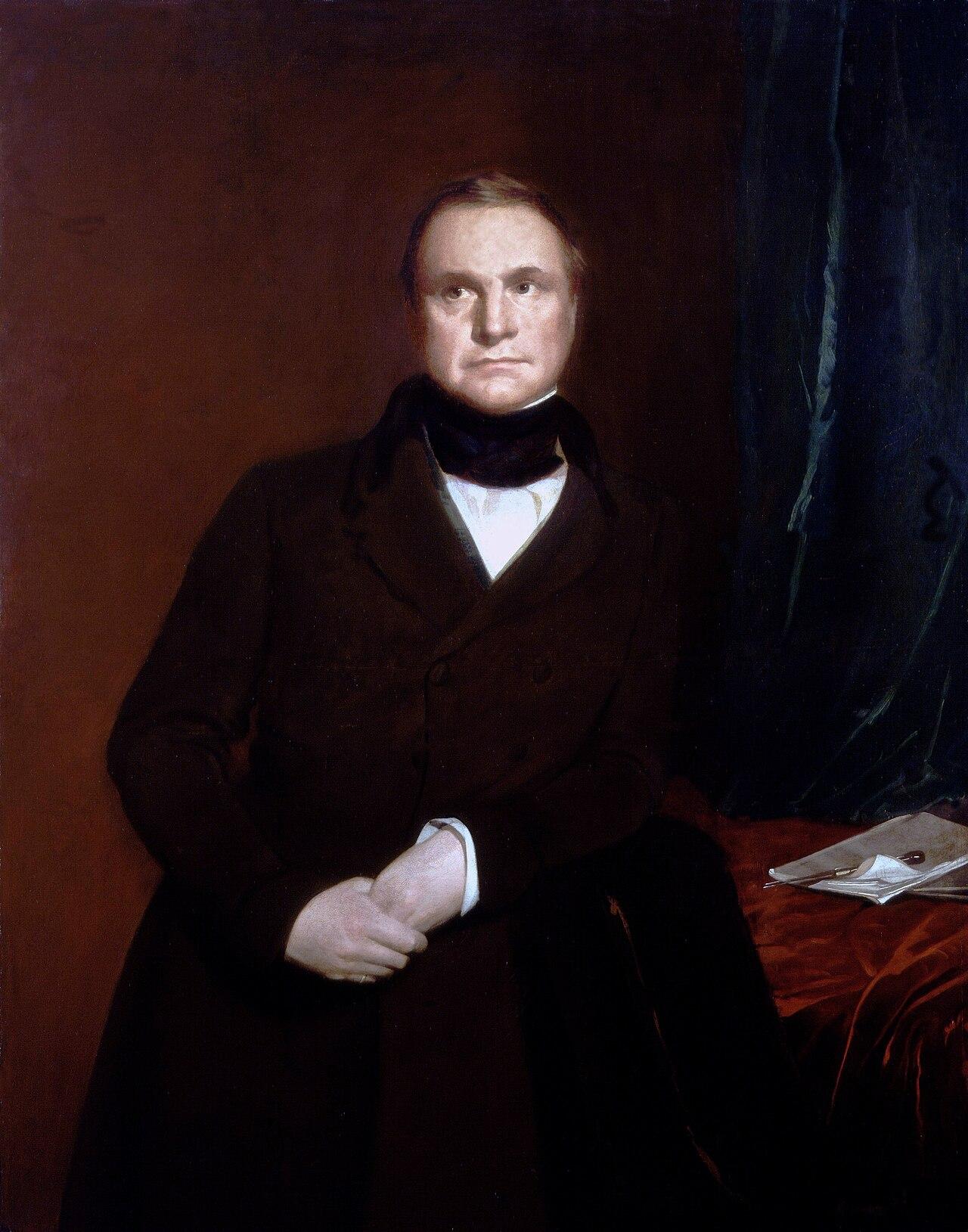
Charles Babbage
Mathematician and inventor · 1791–1871
Georgian and Victorian science
Create a free account to talk with Charles Babbage. It takes a minute and costs nothing.
About this Mind
Charles Babbage was born in London in 1791, the son of a banker. A curious, delicate child who took his toys apart to see inside, he taught himself mathematics and went up to Cambridge in 1810, where with John Herschel and George Peacock he founded the Analytical Society to bring continental analysis into English teaching. Around 1812 he began to think that mathematical tables, full of errors made by human computers and printers, might be calculated by machinery. From 1822 he built a Difference Engine with public money and the engineer Joseph Clement, until a dispute stopped the work in 1833 and the Government abandoned it in 1842. In 1827 he lost his father, his wife Georgiana and two sons. From 1834 he designed the Analytical Engine, a far more general machine with a store and a mill, directed by cards like a Jacquard loom; in 1843 Ada Lovelace published her translation of Menabrea's account of it with her own Notes. He was Lucasian Professor of Mathematics at Cambridge from 1828 to 1839, helped found the Astronomical, Statistical and British Associations, attacked the Royal Society in print, wrote on the economy of manufactures, picked locks, broke ciphers and climbed Vesuvius. In 1864 he published his memoir, Passages from the Life of a Philosopher, while waging a long public war against street musicians. He died in London in 1871 with neither engine built. A Difference Engine No. 2 was completed from his drawings in 1991.
Mindprint
Every dot is one statement about Charles Babbage, placed on the topic it describes. The closer to the center, the firmer its ground.
71 statements across 12 of 12 topics. 64 documented, 6 inferred, 1 speculative.
- Documented: with a source
- Inferred: a careful reading
- Speculative: an extrapolation
- Unknown: never recorded
A picture of what was recorded, never a measure of the person.
| Topic | Documented | Inferred | Speculative | Total |
|---|---|---|---|---|
| Identity | 3 | 0 | 0 | 3 |
| Personality | 2 | 0 | 1 | 3 |
| Beliefs | 8 | 0 | 0 | 8 |
| Values | 2 | 0 | 0 | 2 |
| Communication | 1 | 1 | 0 | 2 |
| Worldview | 1 | 0 | 0 | 1 |
| Knowledge | 7 | 0 | 0 | 7 |
| Experiences | 28 | 0 | 0 | 28 |
| Relationships | 9 | 1 | 0 | 10 |
| Preferences | 2 | 0 | 0 | 2 |
| Reasoning | 0 | 1 | 0 | 1 |
| Uncertainties | 1 | 3 | 0 | 4 |
Sources (10)
This Mind is built from these documents and studies. Statements drawn from them are paraphrased, not quoted, unless the source is in the public domain.
- Reflections on the Decline of Science in England, and on Some of Its Causes (1830)
- On the Economy of Machinery and Manufactures (1832)
- The Ninth Bridgewater Treatise: A Fragment (1837)
- Sketch of the Analytical Engine invented by Charles Babbage, by L. F. Menabrea, with Notes by the Translator (Scientific Memoirs, vol. 3) (1843)
- Passages from the Life of a Philosopher (1864)
- Babbage, Charles (Oxford Dictionary of National Biography) (2004)
- Charles Babbage (Wikipedia)
- Letters from Charles Darwin to Charles Babbage about his Saturday parties
- Charles Babbage (MacTutor History of Mathematics)
- Charles Babbage and Henry Prevost Babbage (biographical pages)