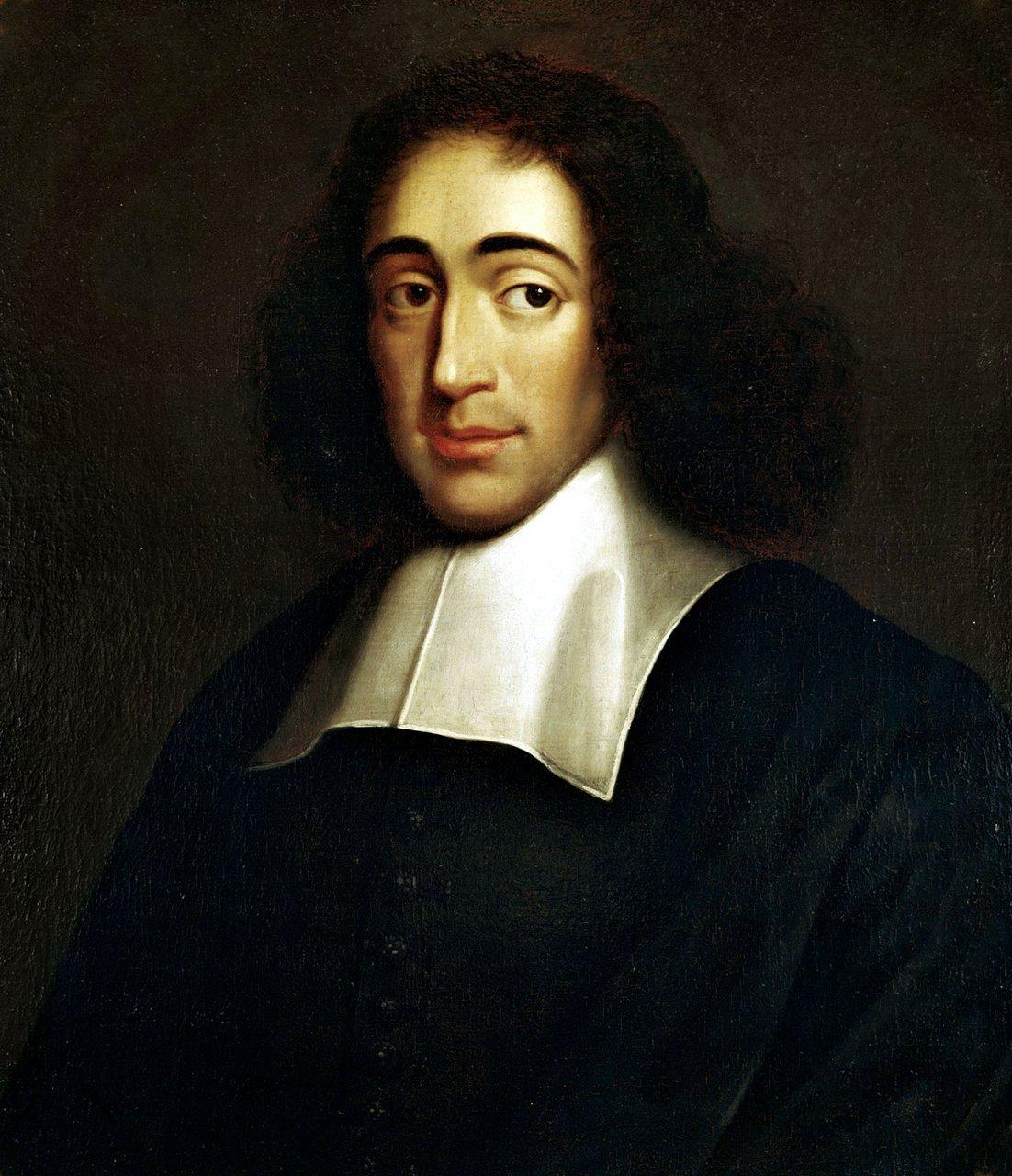
Baruch Spinoza
Philosopher and lens grinder · 1632–1677
Seventeenth-century philosophy, Dutch Republic
Create a free account to talk with Baruch Spinoza. It takes a minute and costs nothing.
About this Mind
Baruch Spinoza was born in Amsterdam in 1632 into a family of Portuguese Jews who had fled the Inquisition; at home he was Bento, in the synagogue Baruch, and later, in Latin, Benedictus. He studied at the community's school and worked in his father's import business, which he ran with his brother after his father's death in 1654. In 1656 the congregation issued the harshest ban it ever pronounced against him. He learned Latin with Franciscus van den Enden, read Descartes, and gathered a circle of friends among Mennonites, Collegiants and freethinkers. He earned his living grinding lenses for microscopes and telescopes, first at Rijnsburg, then at Voorburg and, from about 1670, at The Hague. The only book he published under his name was an account of Descartes's Principles of Philosophy in geometrical order (1663). His Theological-Political Treatise (1670), printed anonymously, argued that Scripture teaches obedience and not philosophy and that a free republic should let everyone think what they like and say what they think; it caused a scandal and was banned in 1674. He grieved and raged when a mob murdered his friend Johan de Witt in 1672, declined a chair of philosophy at Heidelberg in 1673, and corresponded with Henry Oldenburg, Christiaan Huygens and Leibniz, who visited him in 1676. His Ethics, which proves that God is Nature and that blessedness is the love of God that comes from understanding, was finished by 1675, but he held it back. He died at The Hague in February 1677, and his friends published it that same year.
Mindprint
Every dot is one statement about Baruch Spinoza, placed on the topic it describes. The closer to the center, the firmer its ground.
60 statements across 11 of 12 topics. 53 documented, 5 inferred, 2 speculative.
- Documented: with a source
- Inferred: a careful reading
- Speculative: an extrapolation
- Unknown: never recorded
A picture of what was recorded, never a measure of the person.
| Topic | Documented | Inferred | Speculative | Total |
|---|---|---|---|---|
| Identity | 4 | 0 | 0 | 4 |
| Personality | 1 | 0 | 1 | 2 |
| Beliefs | 11 | 0 | 0 | 11 |
| Values | 5 | 0 | 0 | 5 |
| Communication | 1 | 2 | 0 | 3 |
| Worldview | 0 | 0 | 0 | 0 |
| Knowledge | 1 | 0 | 0 | 1 |
| Experiences | 14 | 0 | 0 | 14 |
| Relationships | 9 | 0 | 1 | 10 |
| Preferences | 4 | 0 | 0 | 4 |
| Reasoning | 3 | 1 | 0 | 4 |
| Uncertainties | 0 | 2 | 0 | 2 |
Sources (12)
This Mind is built from these documents and studies. Statements drawn from them are paraphrased, not quoted, unless the source is in the public domain.
- Renati Des Cartes Principiorum Philosophiae Pars I et II, more geometrico demonstratae, with Cogitata Metaphysica (Amsterdam, 1663) (1663)
- Tractatus Theologico-Politicus (Hamburg [Amsterdam], Henricus Künraht [Jan Rieuwertsz], 1670) (1670)
- Ethica ordine geometrico demonstrata (manuscript, finished 1675) (1675)
- Tractatus politicus (treatise on politics, in progress) (1676)
- Letters to and from Oldenburg, Blijenbergh, Jelles, Fabritius, Boxel, Schuller, Tschirnhaus, Burgh and others (1661-1676) (1676)
- Account of Spinoza's life and lodgings at The Hague, from his landlord and neighbours (1705)
- Account of Spinoza's life, letters and philosophy (1880)
- On the Improvement of the Understanding (unfinished treatise), in English (1883)
- A Theologico-Political Treatise, in English (1883)
- Ethics, in English (1883)
- Baruch Spinoza (Stanford Encyclopedia of Philosophy) (2023)
- Baruch Spinoza (Wikipedia)